The English cottage garden is one of the most enduring and beloved gardening styles in the world.
Full of colour, fragrance, texture and seasonal change, it evokes a sense of abundance and informal beauty that feels both nostalgic and deeply natural.
Climbing roses spilling over fences, foxgloves rising above mixed borders, and self-seeding flowers weaving through paths all combine to create a garden that feels alive, slightly untamed, and constantly evolving.
While often associated with Edwardian England, the cottage garden style is less a strict historical reality and more a romantic interpretation of rural life—shaped by artists, writers and gardeners who idealised the countryside.
Regardless of its origins, it remains one of the most popular and achievable garden styles today.
What Is an English Cottage Garden?
A cottage garden is an informal planting style characterised by:
- Dense, mixed planting
- Flowers, herbs and sometimes vegetables grown together
- A natural, “self-seeding” look
- Continuous seasonal interest
- Abundant colour and fragrance
- A slightly wild, unstructured feel
Unlike formal gardens with rigid symmetry, cottage gardens are designed to feel organic and ever-changing.
They are often packed with plants that intermingle freely, creating a layered, naturalistic effect.
A Romantic Vision of the Cottage Garden
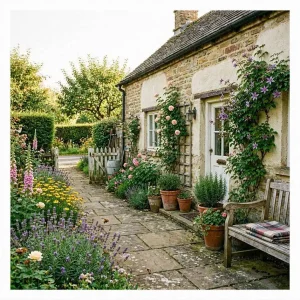
The image of the classic English cottage garden—roses climbing over stone walls, gravel paths winding through flowers, bees drifting through lavender—has become a symbol of rural charm and simplicity.
However, this vision is largely romanticised.
Historically, many rural cottages had small productive plots focused on food rather than ornamental planting. The highly decorative cottage garden we imagine today is more influenced by later artistic interpretations than strict historical accuracy.
Even so, the emotional appeal remains powerful.
It represents:
- A connection to nature
- A slower, simpler lifestyle
- A sense of abundance rather than control
- A refuge from modern urban life
Why Cottage Gardens Still Matter Today
In an age of paved front gardens and low-maintenance landscaping, the cottage garden offers something very different.
It brings:
Biodiversity
Dense planting supports:
- Bees
- Butterflies
- Hoverflies
- Birds
- Beneficial insects
Mental Wellbeing
A colourful, living garden space has been shown to reduce stress and improve mood.
Seasonal Beauty
Unlike static modern gardens, cottage gardens change constantly through the year.
Sustainability
Many cottage garden plants are hardy, self-seeding and low-input once established.
Best Plants for a True English Cottage Garden
A successful cottage garden relies on a rich mix of traditional, reliable and wildlife-friendly plants.
Here are some of the most iconic and effective choices:
Roses (Rosa spp.)
No cottage garden is complete without roses.
Climbing and shrub roses provide structure, fragrance and romance.
Popular varieties include:
- Old-fashioned English roses
- Rambling roses
- Climbing roses trained over arches and fences
They bring height, scent and timeless charm.
Foxgloves (Digitalis purpurea)
Foxgloves are towering biennials that bring vertical drama to borders.
They:
- Thrive in partial shade
- Self-seed freely
- Attract bees in large numbers
Perfect for naturalistic planting schemes.
Lavender (Lavandula angustifolia)
Lavender provides:
- Strong fragrance
- Silvery evergreen foliage
- Long-lasting summer flowers
It is ideal for edging paths and borders.
Delphiniums
These stately perennials add height and bold colour.
They work well as focal points in mixed borders, especially in traditional blue and purple tones.
Hollyhocks (Alcea rosea)
Hollyhocks are classic cottage garden plants that grow tall against walls and fences.
They:
- Create vertical interest
- Self-seed easily
- Add old-fashioned charm
Sweet Peas (Lathyrus odoratus)
Sweet peas are prized for their fragrance and delicate flowers.
They are ideal for:
- Trellises
- Arches
- Cutting gardens
Poppies (Papaver spp.)
Poppies bring effortless beauty with minimal care.
They:
- Self-seed naturally
- Thrive in poor soil
- Add seasonal bursts of colour
Fox-and-Cubs, Cornflowers and Wildflowers
These meadow-style plants blur the line between garden and countryside.
They are essential for creating a more natural, flowing cottage garden feel.
Lupins
Lupins provide bold spires of colour and work well in mixed perennial borders.
They add structure and contrast beautifully with softer plants.
Geraniums (Cranesbills)
Hardy geraniums are indispensable in cottage gardens.
They:
- Fill gaps between larger plants
- Flower for long periods
- Require very little maintenance
Herbs in the Cottage Garden
Traditional cottage gardens often combine ornamental and edible planting.
Useful herbs include:
- Rosemary
- Thyme
- Sage
- Mint (contained)
- Chives
These add fragrance, structure and practicality.
How to Design a Cottage Garden
The key to success is not strict planning, but layering and abundance.
Step 1: Start with Structure
Add:
- Climbers (roses, clematis)
- Tall perennials (hollyhocks, delphiniums)
- Shrubs for backbone
Step 2: Fill with Mid-Height Plants
Add:
- Foxgloves
- Lavender
- Lupins
- Geraniums
Step 3: Add Ground-Level Plants
Include:
- Poppies
- Self-seeders
- Low herbs
- Wildflowers
Step 4: Encourage Natural Spread
Allow plants to:
- Self-seed
- Spill into paths
- Mix freely
This creates the signature cottage garden effect.
The Role of “Controlled Wildness”
A cottage garden is not chaotic—it is guided naturalism.
The goal is to create a space that feels:
- Lush but not overgrown
- Wild but still intentional
- Abundant but balanced
It is a garden style that embraces imperfection as beauty.
Cottage Gardens and Wildlife
These gardens are excellent for biodiversity.
They support:
- Pollinators
- Birds
- Beneficial insects
- Soil organisms
By avoiding harsh chemicals and allowing natural cycles, cottage gardens become living ecosystems.
Low Maintenance Myth
Cottage gardens are often described as low maintenance, but this is only partly true.
They require:
- Seasonal pruning
- Deadheading
- Managing self-seeding plants
- Occasional reshaping
However, once established, they become increasingly self-sustaining.
Frequently Asked Questions
What makes a cottage garden?
A cottage garden is an informal planting style with dense, mixed flowers, herbs and climbers that create a natural, abundant look.
Are cottage gardens high maintenance?
They require some maintenance, especially in early years, but become more self-sustaining over time.
Can I create a cottage garden in a small space?
Yes. Even small gardens can use vertical planting and dense borders to achieve the look.
What is the best rose for a cottage garden?
Old English shrub roses and rambling roses are ideal for their fragrance and natural appearance.
Do cottage gardens support wildlife?
Yes. They are among the best garden styles for pollinators and biodiversity.
Further Reading
Explore more garden design and planting ideas:
The Allotment Garden
https://www.theallotmentgarden.co.uk/cottage-garden-plants/
https://www.theallotmentgarden.co.uk/best-flowers-attract-bees-butterflies/
External Resources
https://www.gardenersworld.com
https://www.gardenorganic.org.uk
https://www.english-heritage.org.uk
Final Thoughts
The English cottage garden is less about historical accuracy and more about emotional resonance.
It represents a desire for beauty, abundance and connection to nature in an increasingly managed world.
Whether on a large plot or a small urban space, the cottage garden style remains one of the most accessible and rewarding ways to garden.
It is not a relic of the past—it is a living, evolving style that continues to inspire gardeners today.