Few houseplants attract as much curiosity as the pitcher plant. With their elegant hanging traps and remarkable ability to catch and digest insects, these fascinating carnivorous plants are unlike anything else you can grow indoors.
Despite their exotic appearance, many pitcher plants are surprisingly easy to care for once you understand their needs. The key is to recreate the warm, humid conditions they enjoy in the wild.
In this guide, you’ll learn everything you need to know about growing healthy pitcher plants, including watering, feeding, humidity, repotting and troubleshooting common problems.
What is a Pitcher Plant?
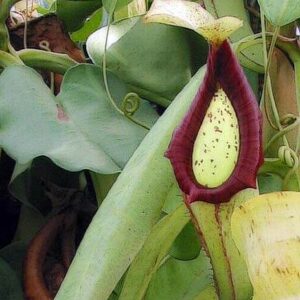
Pitcher plants are carnivorous plants that have evolved specialised leaves known as “pitchers”. These modified leaves form tube-like traps that capture and digest insects.
Unlike most plants, pitcher plants often grow in nutrient-poor soils where essential minerals are scarce. To compensate, they obtain nutrients by trapping and digesting insects.
There are several groups commonly referred to as pitcher plants, including:
- Nepenthes (Tropical Pitcher Plants)
- Sarracenia (North American Pitcher Plants)
- Cephalotus (Australian Pitcher Plant)
The most commonly sold houseplant varieties belong to the Nepenthes group.
Their spectacular hanging pitchers make them one of the most unusual and rewarding houseplants available.
How Do Pitcher Plants Catch Insects?
The pitchers act as highly specialised traps.
Each pitcher produces nectar around its rim, attracting insects such as:
- Flies
- Wasps
- Ants
- Small beetles
Once an insect lands on the slippery edge, it often loses its footing and falls inside.
The inner walls of the pitcher are coated with waxy surfaces and downward-pointing hairs that make escape extremely difficult.
At the bottom of the pitcher sits a digestive fluid that breaks down the insect and releases valuable nutrients that the plant absorbs.
It is one of nature’s most remarkable examples of adaptation.
Are Pitcher Plants Difficult to Grow?
Many people assume carnivorous plants are difficult to care for.
In reality, most problems occur because growers treat them like ordinary houseplants.
Pitcher plants have a few specific requirements:
- Bright indirect light
- High humidity
- Pure water
- Free-draining growing media
- Warm temperatures
Meet these needs and your plant should thrive.
Light Requirements
Light is one of the most important factors in pitcher plant care.
Ideal Lighting
Pitcher plants prefer:
- Bright indirect light
- Filtered sunlight
- Conservatories
- East-facing windows
- Bright greenhouses
Too little light can result in:
- Poor pitcher production
- Weak growth
- Pale leaves
Avoid Strong Direct Sun
While they enjoy bright conditions, intense summer sunshine through glass can scorch leaves and pitchers.
A position near a bright window with light shading is often ideal.
Temperature Requirements
Most tropical pitcher plants originate from warm rainforest environments.
Recommended Temperatures
Daytime:
- 18°C to 28°C
Night-time:
- 15°C to 20°C
Many varieties tolerate temperatures down to around 10°C for short periods but generally perform better in warmer conditions.
Avoid:
- Cold draughts
- Unheated conservatories in winter
- Sudden temperature fluctuations
Humidity: The Secret to Healthy Pitchers
Humidity is often the biggest challenge when growing pitcher plants indoors.
Most species thrive in humidity levels between:
- 50% and 80%
Low humidity can cause:
- Pitchers to dry out
- Brown pitcher edges
- Failure to produce new traps
How to Increase Humidity
Try the following methods:
- Mist regularly with rainwater
- Group houseplants together
- Use a humidity tray
- Place the plant in a bathroom with good light
- Use a small humidifier
A tray of damp pebbles beneath the pot is one of the simplest solutions.
Watering Pitcher Plants
Unlike many houseplants, pitcher plants are sensitive to minerals found in tap water.
Best Water Types
Use:
- Rainwater
- Distilled water
- Reverse osmosis water
Avoid hard tap water wherever possible.
Watering Advice
Keep compost:
- Consistently moist
- Never waterlogged
- Never completely dry
Allowing the growing medium to dry out can damage roots and pitchers.
What Compost Do Pitcher Plants Need?
Pitcher plants dislike ordinary houseplant compost.
In the wild they grow in nutrient-poor conditions with excellent drainage.
Suitable Potting Mix
A good mix might contain:
- Orchid bark
- Perlite
- Sphagnum moss
- Carnivorous plant compost
The aim is to create a loose, airy growing medium that retains moisture without becoming saturated.
Some growers also add a small amount of horticultural charcoal to improve drainage and freshness.
Repotting Pitcher Plants
Pitcher plants generally require repotting every two to three years.
Signs Repotting is Needed
- Roots emerging from drainage holes
- Compost breaking down
- Poor growth
- Waterlogging problems
When to Repot
Spring is usually the best time.
Choose a pot only slightly larger than the existing container.
Do Pitcher Plants Need Feeding?
This is one of the most misunderstood aspects of carnivorous plant care.
Insects are Usually Enough
If your plant catches insects naturally, additional feeding is often unnecessary.
Indoor plants may benefit from occasional supplemental feeding.
Fertiliser Use
If using fertiliser:
- Use a very dilute solution
- Apply during active growth
- Feed sparingly
Overfeeding can damage roots and pitchers.
Many growers successfully grow pitcher plants without fertiliser at all.
Should You Feed Insects to Pitcher Plants?
Occasional feeding can be beneficial.
Suitable prey includes:
- Small flies
- Gnats
- Tiny insects
Avoid:
- Large insects
- Meat
- Cheese
- Human food
These can rot inside the pitcher and cause problems.
Common Problems
Pitchers Turning Brown
Often caused by:
- Low humidity
- Natural ageing
- Underwatering
Old pitchers eventually die and can be removed.
No New Pitchers Forming
Usually caused by:
- Insufficient light
- Low humidity
- Stress after moving
Yellow Leaves
May indicate:
- Overwatering
- Poor drainage
- Mineral build-up from tap water
Blackened Growth
Can occur after exposure to cold temperatures.
Are Pitcher Plants Safe Around Pets?
Most pitcher plants are considered non-toxic to cats and dogs.
However, it is always best to prevent pets from chewing any houseplant.
Frequently Asked Questions
How long do pitcher plants live?
With proper care, pitcher plants can live for many years and continue producing new pitchers annually.
Can I grow a pitcher plant in a bathroom?
Yes, provided there is sufficient natural light. Bathrooms often provide excellent humidity levels.
Do pitcher plants smell?
Most houseplant varieties have little or no noticeable scent.
Why is my pitcher plant not producing pitchers?
The most common causes are insufficient light or low humidity.
Can I use tap water?
Rainwater is strongly preferred. Hard tap water can eventually damage the plant.
Should I fill the pitchers with water?
Many healthy pitchers contain their own digestive fluid. If a pitcher appears empty, adding a small amount of rainwater may help, but avoid filling it completely.
Further Reading
Related Articles on The Allotment Garden
Recommended External Resources
- Royal Horticultural Society – Carnivorous Plants Guide
- International Carnivorous Plant Society
- BBC Gardeners’ World – Carnivorous Plant Advice
Final Thoughts
Pitcher plants are among the most fascinating plants you can grow indoors. Their unusual appearance, insect-catching abilities and exotic origins make them a real conversation piece.
Although they have a reputation for being difficult, most varieties are surprisingly straightforward to grow once their basic requirements for light, humidity and water quality are met.
Provide the right conditions and your pitcher plant will reward you with a continual display of beautiful and highly effective insect traps for many years to come.